An Overview of Homeowners Insurance

homeowners-insuranceOne of the easiest ways to save some money is to do an occasional review of auto and homeowners insurance. Last week I wrote about auto insurance (http://blog.ryanhlaw.com/an-overview-of-auto-insurance/) and today I will discuss homeowners insurance in more detail.

The majority of homeowners insurance policies will pay for most losses unless the loss is caused by something excluded. Things that usually aren’t covered by any insurance includes routine maintenance, damage from flooding[1] or landslides, damage from earthquakes, sewer backup and acts of terrorism.

PROPERTY PROTECTION

Four specific things are covered by the property protection portion of your insurance:

Part A: Dwelling and attached structures

This covers damage to your home and any attached structures (an attached garage, for example). For example, if your roof is damaged in a hail storm and you need a new roof Part A would pay for a new roof. If your stove catches on fire and your kitchen is destroyed, Part A will pay to repair the damage.

Part B: Detached structures

This covers any structures that aren’t attached to your main home – a detached garage, a storage shed, etc. Coverage is usually 10% of Part A. If, for example, you have $200,000 worth of insurance in Part A you would have $20,000 worth of insurance on Part B.

Part C: Personal property

This includes all the property in your home – your TV, computer, clothing, etc. It is important that you have a record of what you have in your home so you could prove what you owned if it was stolen or destroyed.

Coverage is limited for many items, so you may need a rider if you have a collection or expensive pieces of jewelry, furs, stamps, firearms, antiques, tools, memorabilia or other similar items.

You will have a deductible for the property protection portions of your insurance – standard is $1,000, but if you have the cash you can raise your deductible which will lower your premium.

You want to look carefully to see if you have replacement cost or actual cash value. Replacement cost will pay for a replacement (i.e. if you have a 25-inch flatscreen TV that is stolen you will get a new 25-inch flatscreen TV). With actual cash value depreciation is taken into account. If your 25-inch flatscreeen is 5 years old and the insurance company figures that TVs last for 10 years you will only get about half the cost of a new TV.

Part D: Living Expenses

If you can’t live in your home while repairs are being made or while it is rebuilt this portion will help pay for similar living expenses.

LIABILITY COVERAGE

The other part of homeowners insurance is liability coverage – which provides coverage for personal injuries or property damage that you or others living in your home may be responsible for.

This portion covers the cost of your defense regardless of whether or not you are found liable. If you are found liable your insurer will cover damages up to the total of your liability coverage.This can be on or off your property and it does not cover intentional acts.

Included as part of liability insurance is medical payments to others that will help pay the doctor’s bills for people injured by you, a family member or your pets.

Other standard coverage includes:

  • Fire Department Service Charge, which will pay the cost of a fire department run
  • Debris Removal coverage, which pays for the cost of removing damaged property

As a reminder, for those that live in Utah, I am happy to review your homeowner’s insurance coverage and run a quote against a number of the nation’s highest rated companies to see if I can save you some money.

[1] Flood Insurance is provided by the federal government – you can access that at www.floodsmart.gov

Share this:
Facebooktwitterpinterestlinkedinmail

An Overview of Auto Insurance

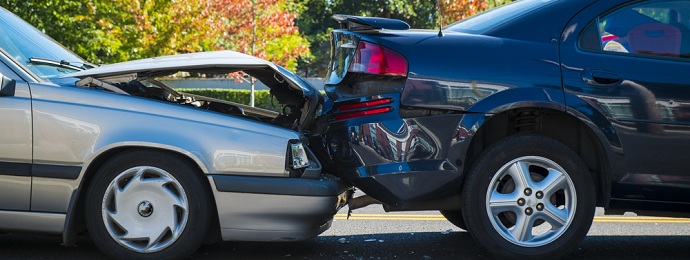
auto accidentAuto insurance is one item that we buy hoping that we will never have to use it. While I don’t know anyone who enjoys paying for it each month, we understand it is important (and it is required by law if you own a vehicle!) so we go ahead and keep paying for it.


However, just because you have to pay for it doesn’t mean you should be overpaying for it. When was the last time you reviewed your coverage? While this may not be the most fun you will have in an afternoon, if you haven’t reviewed your insurance documents recently, you may be missing out on some cash that you can apply to some of your other financial goals.

Today I am going to briefly review auto insurance and give you a few tips for how you may be able to save some money on it.

Your auto insurance has several different types of coverages:

  • Bodily Injury Liability per person
  • Bodily Injury Liability per occurrence
  • Property Damage
  • Uninsured/underinsured coverage
  • Comprehensive
  • Collision

Bodily Injury Liability per person

If you cause an accident, this coverage covers people outside of your vehicle who sustain injuries. Whatever the amount is in this section (i.e. $30,000) is the maximum your insurance will pay for each person who is injured.

Bodily Injury Liability per occurrence

This is the same as the bodily injury per person, but it is the maximum your insurance will pay per occurrence. For example, if you have $30,000 in coverage per person, and $60,000 per occurrence and two people are injured by you and have bills of $35,000 each, your insurance will only pay $30,000 for each one because they reach both the limit per person and maximum per occurrence.

Imagine that there were four people injured and each had $30,000 worth of medical bills. How much does each person get then? $15,000 (maximum of $60,000 per accident – $60,000 divided by four people gives you $15,000).

Property Damage

If you cause an accident this covers property that is damaged – whether it is a mailbox or other vehicles.

For bodily injury and property damage state minimums are usually fairly low. For example, in Missouri it is $25,000 per person, $50,000 per occurrence and $10,000 in property damage. In Utah it is $25,000 per person, $60,000 per occurrence and $15,00 in property damage. Hopefully you can see how quickly you can surpass these limits. You can cause more than $10,000-$15,000 in damage in even a fairly minor accident.

I strongly suggest you purchase the highest Liability (Bodily Injury and Property Damage) that you can afford. Increasing these will give you peace of mind that if you cause an accident you won’t personally be liable for medical bills and property damage up to a high limit. I actually don’t sell any policies that are less than $100,000 per person, $300,000 per occurrence and $100,000 in property damage (or 100/300/100).

Uninsured/Under-insured motorist coverage

If someone who is uninsured or under-insured hits you and you are hurt, this clause of your insurance will help pay your medical bills. Some states require you to have some uninsured motorist coverage.

Comprehensive

This coverage pays out when your vehicle has been damaged in some way (except in a collision). For example, if your vehicle sustains storm damage or a vandal keys your car this coverage will help pay to fix the damage.

Collision

If you hit something (car, tree, pole, etc.) this coverage will help pay to fix the damage.

Both comprehensive and collision have a deductible that you will have to pay before the insurance company kicks in any money.

Money Saving Tips

My first tip to help save you money is to review your deductible for comprehensive and collision. If you can afford to increase your deductible I would encourage you to consider it. You would be responsible for meeting the full deductible before any damage is paid out, so you would need cash set aside in your emergency fund to help pay this, but increasing your deductible will save you money on your monthly bill.

If you drive a very old, essentially worthless car that is paid for consider whether it is worth keeping comprehensive and collision. If your car was totaled and the insurance company would only pay you $200 because that is all it’s worth then you are probably better off dropping this coverage. Keep in mind that if your car is damaged (other than in an accident that someone else causes) you would then be liable, in full, for any damages to your vehicle.

Finally – shop around for quotes occasionally. Have you been with the same insurance company for ten years because you saw an ad that said they can save you 10% on your car insurance? It never hurts to check around to see if you can get the same or better coverage for less money. You can usually get a few quotes online fairly easily. You can also check with an independent insurance agent who can shop a number of different companies and find you the best deal.

For those in Utah, I sell auto and home insurance and actually take care of the shopping part for you. My company rate-shops 10-15 companies to find you the best deal. Contact me if you would like more details.

Share this:
Facebooktwitterpinterestlinkedinmail